
What Is a Chimney Liner?
A chimney liner is the passage inside a chimney that carries smoke and combustion gases from an appliance to the outdoors. It also separates those hot, corrosive byproducts from the chimney structure, so the liner must fit the appliance and flue.
Need help now? (443) 596-9310
What Is a Chimney Liner, and What Does It Protect?
A chimney liner, also called a flue liner, forms the inner passage that exhaust travels through. It helps keep combustion gases and heat contained as they move from a fireplace, stove, or other connected appliance up and out of the chimney.
The liner also helps shield chimney masonry from heat and corrosive substances in exhaust. An intact liner does not fix every chimney problem, but a damaged, missing, or incorrectly sized liner can affect how the system contains and vents combustion products.
A liner is not the same as the entire chimney. The chimney includes the surrounding structure and other parts, while the liner is the interior channel. The right choice depends on the appliance, fuel, flue dimensions, and the condition of the existing chimney.
Which Chimney Liner Option Fits the Appliance?
Liner materials and installation methods are not interchangeable in every chimney. The appliance and the existing flue determine which option is suitable; a visual guess from the fireplace opening cannot establish the correct fit.
Clay tile
Many masonry chimneys have clay tile sections inside the flue. An existing tile liner may remain usable when it is intact and appropriate for the connected appliance; cracks or missing sections call for a closer evaluation.
Metal liner
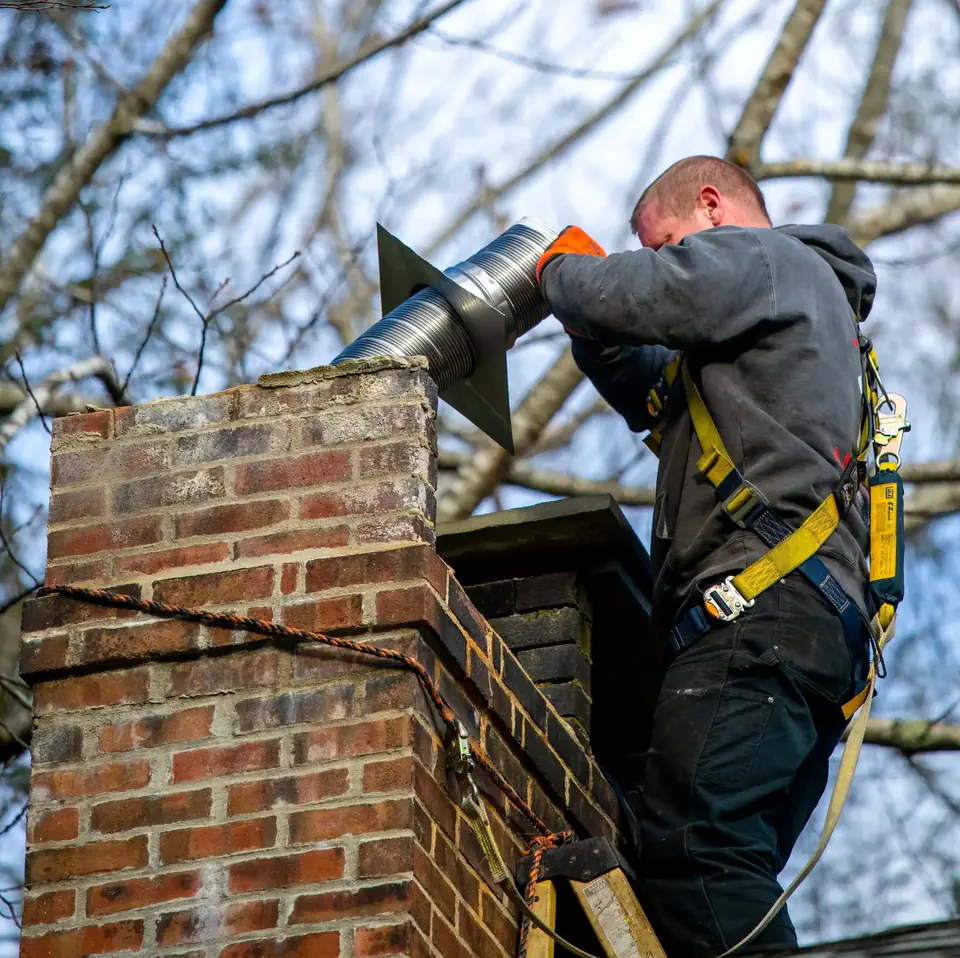
A metal liner is a separate passage installed inside the chimney. Its dimensions and configuration must suit the appliance and the route through the flue, particularly when relining an existing chimney.
Cast-in-place liner
This approach forms a new liner within the chimney rather than inserting a continuous metal passage. Whether it fits depends on the chimney’s construction and the work needed to create a suitable channel.
Can You Put a Liner in an Old Chimney?
Often, an older chimney can be relined, but age alone does not determine whether a liner will fit. The flue’s dimensions, shape, condition, and connection to the appliance must be checked before choosing a material or installation method.
A relining project may be appropriate when an existing liner is damaged or when an appliance change makes the current flue unsuitable. A chimney inspection helps identify the condition of the passage and whether the project requires additional repair. See our guide to installing a liner in an old chimney for more on that decision.
Do not try to force a liner through a flue or remove masonry to make one fit. Contact a chimney sweep if you see damaged tile, loose material, or signs of deterioration, and arrange an assessment before using an appliance with a suspected liner problem.
Need help now? (443) 596-9310
What Should Be Checked Before Chimney Liner Work?
A useful evaluation connects the appliance to the full route through the chimney. These details help establish what needs inspection before anyone selects a replacement liner.
- Appliance and fuel — Identify what connects to the chimney and whether it burns wood, gas, or another fuel. Different appliances place different demands on the flue.
- Flue condition — Ask whether the existing liner has cracks, gaps, missing sections, or other visible damage. A fireplace view alone may not show the full interior.
- Flue dimensions and route — The liner must fit the chimney passage and its bends or offsets. Measurements help determine whether a chosen liner can travel through the flue.
- Recent changes or damage — Mention an appliance change, a chimney fire, or significant weather damage. The CSIA Level 2 inspection procedure identifies these as situations in which a Level 2 inspection is recommended and a video scan is required.
How Does Chimney Liner Installation Proceed?
The work should follow the chimney’s condition and the connected appliance, rather than begin with a liner chosen by appearance. These are the practical checkpoints in a properly planned installation.
- Identify the appliance — Record the fireplace or stove type and its fuel. Check that the liner plan accounts for the appliance it will vent.
- Examine the chimney — Inspect the accessible masonry, flue opening, and existing liner. Look for damage that could affect the new liner or require repair first.
- Inspect the flue interior — Use an appropriate inspection method to assess the length of the passage, including areas that cannot be seen from below. Check for obstructions, breaks, or offsets that affect the route.
- Measure the passage — Measure the flue and note its shape and turns. Confirm that the proposed liner dimensions and components can fit the route.
- Select the liner system — Match the liner material and configuration to the appliance, fuel, and chimney. Check that the planned parts form a compatible vent path.
- Prepare the chimney — Address obstructions or damaged sections that would interfere with installation. Check that the passage is ready to receive the liner before placing components.
- Install and connect the liner — Place the liner through the chimney and connect it to the appliance using the appropriate parts. Check that it follows the intended route and that connections are secure.
- Verify the finished path — Review the completed installation and its connections. Confirm that the liner forms a continuous exhaust route from the appliance through the chimney termination.
What Can Go Wrong With a Chimney Liner?
A liner problem can be hidden inside the chimney, so a fireplace that looks normal does not prove the flue is sound. Stop using the appliance and arrange a professional evaluation when you notice damage or a change in how it vents.
- The liner does not fit the appliance — A mismatch in dimensions or configuration can compromise the intended vent path. Have the appliance and flue evaluated together rather than selecting a liner by the fireplace opening alone.
- The old flue has damage — Cracked tile, gaps, or loose pieces may mean the existing passage cannot perform as intended. A sweep can inspect the chimney and identify whether relining or other repair is needed.
- The liner route is blocked or obstructed — Debris or an unexpected turn can prevent a liner from passing through the chimney correctly. Do not push parts through by force; have the route checked first.
- The installation has an incomplete connection — A liner must connect to the appliance and continue through the chimney as a complete passage. Have the work reviewed if a connection looks loose or the liner appears to stop short.
Need help now? (443) 596-9310
When Should You Arrange a Chimney Liner Inspection?
Arrange an inspection before using an appliance when you suspect liner damage, and after a chimney fire or significant weather event. A change to the connected appliance is another reason to evaluate whether the existing flue is still suitable. The CSIA’s homeowner resources also explain inspection and maintenance considerations for chimneys.
A chimney sweep can assess the flue and help determine whether it needs cleaning, repair, or a new liner. We provide chimney liner installation service and inspection in Maryland; share the appliance type and any known chimney changes when you book.
To schedule, call Maryland Chimney Pros at (443) 596-9310. We are open 24 hours a day, 7 days a week, and same-day service is available. You can also review our guide to whether a chimney liner is necessary before arranging an evaluation.
Frequently asked questions
What happens during a chimney liner evaluation?
The chimney and its flue are assessed along with the appliance that vents through them. The review checks the existing passage, its dimensions and condition, and whether relining or other work is needed.
Can a chimney liner be installed without removing the chimney?
In many situations, a liner can be installed within the existing chimney rather than removing the chimney structure. The flue’s shape, condition, and access determine whether that approach is suitable.
Does a new liner mean the chimney no longer needs inspection?
No. A new liner does not remove the need to inspect the chimney and connected appliance. The CSIA homeowner resources describe regular chimney inspection as part of maintaining the system.
What information should I have when booking chimney liner work?
Share the appliance type, its fuel, and whether it has recently changed. Mention any known flue damage, smoke or venting changes, or chimney fire so the evaluation can focus on the relevant conditions.
Arrange a Chimney Liner Evaluation
Call Maryland Chimney Pros at (443) 596-9310 to book chimney liner service.