
Can You Install a Chimney Liner in an Old Chimney?
Yes, you can put a liner in an old chimney if its condition, size, and appliance allow a suitable installation. An inspection helps determine whether the flue needs repairs first and which liner fits.
Need help now? (443) 596-9310
Can You Put a Liner in an Old Chimney? Start With Its Condition
Yes, an old chimney can often be lined. Its age alone does not determine whether a liner will work: the flue’s shape and condition, the appliance it serves, and the fuel it burns all affect the choice.
The first decision is whether the existing chimney can accept a liner as it stands or needs repair before installation. A liner is not a fix for unstable masonry, a blocked flue, or damaged parts that still need attention.
The chimney is sound and the flue is suitable
A correctly sized liner can create a continuous passage for exhaust through the existing chimney. The installer checks the flue and appliance together so the liner suits the system, rather than choosing by chimney age or appearance.
The flue has damage or an obstruction
Cracked flue tiles, missing mortar, sharp offsets, or debris can affect the installation. The damaged area or obstruction may need to be addressed before a liner can be safely fitted.
The chimney needs substantial rebuilding
A liner does not restore failing brickwork or make an unstable chimney sound. The inspection should identify whether masonry repair or rebuilding needs to come before liner work.
Inspect the Old Flue Before Choosing a Chimney Liner
A visual check from the fireplace opening may not reveal damage higher in the flue. A chimney sweep can inspect the interior, look for obstructions and deterioration, and assess how the chimney connects to the appliance. For an older chimney, these details help prevent a poor fit or hidden damage being covered by the new liner.
The CSIA Level 2 masonry chimney procedure identifies relining as a reason for a Level 2 inspection and calls for a video scan. A camera view can show conditions inside the flue that are difficult to assess from the firebox alone.
Tell the inspector what appliance uses the chimney and whether it burns wood, gas, or another fuel. Also mention known smoke problems, past chimney fires, water entry, or recent changes to the fireplace or appliance; each detail can affect what needs checking.
Choose the Liner Approach That Matches the Chimney
The right option depends on the flue’s route, its condition, and the connected appliance. These approaches are not interchangeable; an inspection should establish which one fits the actual chimney.
- Install a liner through the existing flue — This can suit a chimney whose masonry is sound and whose flue dimensions and route accommodate the liner. The liner still needs to match the appliance and fuel.
- Repair the flue, then install a liner — This approach fits when inspection finds defects that must be corrected before the liner goes in. Addressing the underlying damage first avoids treating the liner as a substitute for masonry repair.
- Repair or rebuild before relining — If the chimney structure is deteriorated or unstable, structural work may need to come first. The liner decision follows once the chimney can support the planned installation.
Need help now? (443) 596-9310
How Chimney Liner Installation Proceeds in an Old Chimney
A professional installation follows the chimney from the appliance connection to the top termination. The work and time on site depend on the flue’s dimensions, access, and any repairs identified during inspection; a chimney needing masonry work is a different scope from one ready for a liner.
- Identify the appliance and fuel — The installer records what the chimney serves and how it is used. Check that the proposed liner is intended for that appliance and fuel before selecting its size or material.
- Examine the flue — A flashlight and, where needed, a chimney camera help reveal the flue’s route, obstructions, and visible damage. Check the full passage rather than relying only on what can be seen from the fireplace opening.
- Measure the flue and connection — Measurements help determine the liner size and how it will connect to the appliance. Check that the planned route and dimensions work with the appliance, not just the chimney opening.
- Decide whether repairs come first — The inspection findings show whether damaged masonry, flue tiles, or other obstacles need attention before relining. Confirm that the repair plan addresses the identified defect instead of covering it.
- Prepare the route — The installer prepares the flue for the liner, including addressing obstructions that prevent a proper fit. Check that the intended path is clear and that the installation can reach the appliance connection.
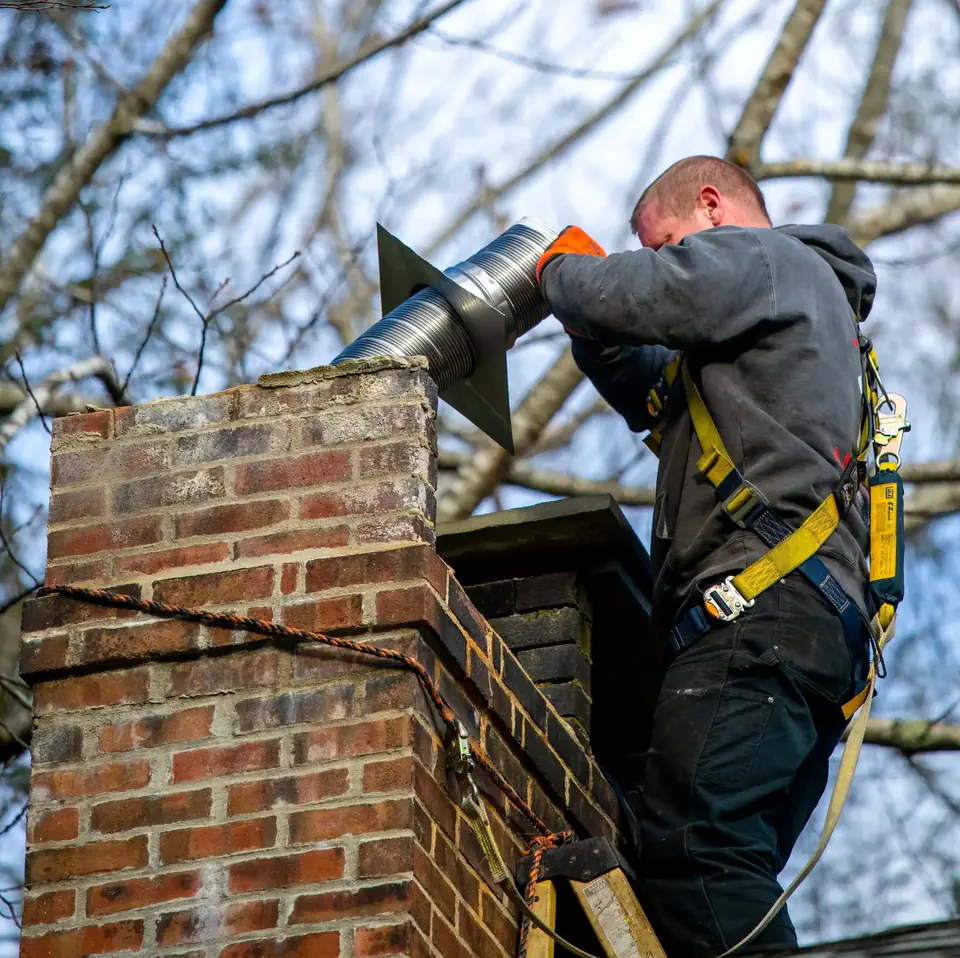
- Fit the liner — The liner is guided through the chimney and positioned to serve the appliance. Check that it follows the flue route without a blockage or poor fit at the connection.
- Connect the appliance and finish the top — The installer connects the liner at the appliance and completes its termination at the chimney top. Check that the connection and top finish are secure and that the flue remains open.
- Review the finished installation — The completed system should be checked for the issues found during inspection and for a clear route through the liner. Ask what was installed and what condition the original flue was in.
Signs an Old Chimney Needs More Than a New Liner
A liner addresses the flue passage; it does not automatically correct every chimney problem. Stop using the appliance and arrange a professional assessment when you notice signs that could point to damage or an unsafe venting path.
- Cracked or missing flue tiles — Visible breaks or gaps suggest that the flue needs closer evaluation before a liner is chosen. The inspector should determine whether the damage affects the proposed route or requires repair first.
- Smoke entering the room — Smoke coming into the living space can have more than one cause, including a problem with the venting path. Do not assume a liner alone will solve it; have the appliance and chimney assessed together.
- Water stains, loose masonry, or falling debris — These signs may point to deterioration beyond the flue interior. A liner will not repair a leaking chimney or secure loose brickwork, so identify and address the source.
- Evidence of a past chimney fire — A fire can damage parts of the chimney that are not visible from the room. Arrange an inspection before using the appliance again; the evaluation may change whether repair or relining comes first.
Decide Whether the Old Chimney Needs Relining or Repair First
A relining decision should be based on the inspection findings, not on age by itself. Ask the chimney professional to connect each recommendation to a visible condition or an appliance requirement.
Choose liner installation when the flue is suitable
This fits when the chimney’s condition and dimensions allow a compatible liner to be installed. The plan should identify the liner route and how it connects to the appliance.
Choose repair before lining when defects remain
This fits when inspection finds damage that would affect the liner or the chimney around it. Ask which defect needs repair and how the work will be checked before installation continues.
Choose further structural work when the chimney is unsound
A liner is not a replacement for a stable chimney structure. When masonry needs more extensive work, settle that scope before deciding whether relining is appropriate.
Need help now? (443) 596-9310
Check the Finished Liner and Keep the Inspection Record
After installation, ask the installer to identify the liner, show how it connects to the appliance, and describe any repairs made to the original flue. Keep the inspection findings and installation details with your home records so future service can refer to the system that is actually in place.
Do not use the appliance if smoke spills into the room, the liner connection appears loose, or you notice new debris or damage. Have a chimney professional check the system before using it again. For the separate question of whether a liner is needed at all, read when a chimney liner is necessary.
Book a Chimney Liner Assessment for an Older Chimney
To arrange an assessment, call Maryland Chimney Pros at (443) 596-9310 or contact us. Share the appliance type, fuel, and any known flue damage so the visit can focus on the right questions.
We provide chimney liner installation service, with same-day service available and service open 24 hours a day, 7 days a week. The chimney liner installation cost guide covers the pricing question separately; the condition and scope of an old chimney determine what work it needs.
Frequently asked questions
Does an old chimney always need a new liner?
No. The answer depends on the existing flue’s condition, dimensions, and the appliance it serves. An inspection can establish whether the current flue is suitable, needs repair, or should be relined.
Can a liner go into a chimney with cracked flue tiles?
Possibly, but the cracks need professional assessment before installation. The inspection should determine whether repairs are needed first and whether the planned liner can fit the flue safely.
Can I install a chimney liner myself?
Liner work involves assessing the full flue, matching the liner to the appliance, and making connections at the appliance and chimney top. Have a chimney professional inspect and install it, especially when the existing flue is old or damaged.
How long does chimney liner installation take?
Time on site depends on access, the flue’s route and dimensions, and whether masonry repairs are needed. An inspection can establish the scope so the installer can set expectations for your specific chimney.
Find Out What Your Old Chimney Needs
Call Maryland Chimney Pros at (443) 596-9310 to arrange a chimney assessment and discuss liner installation.