
What Does Creosote Look Like in a Chimney?
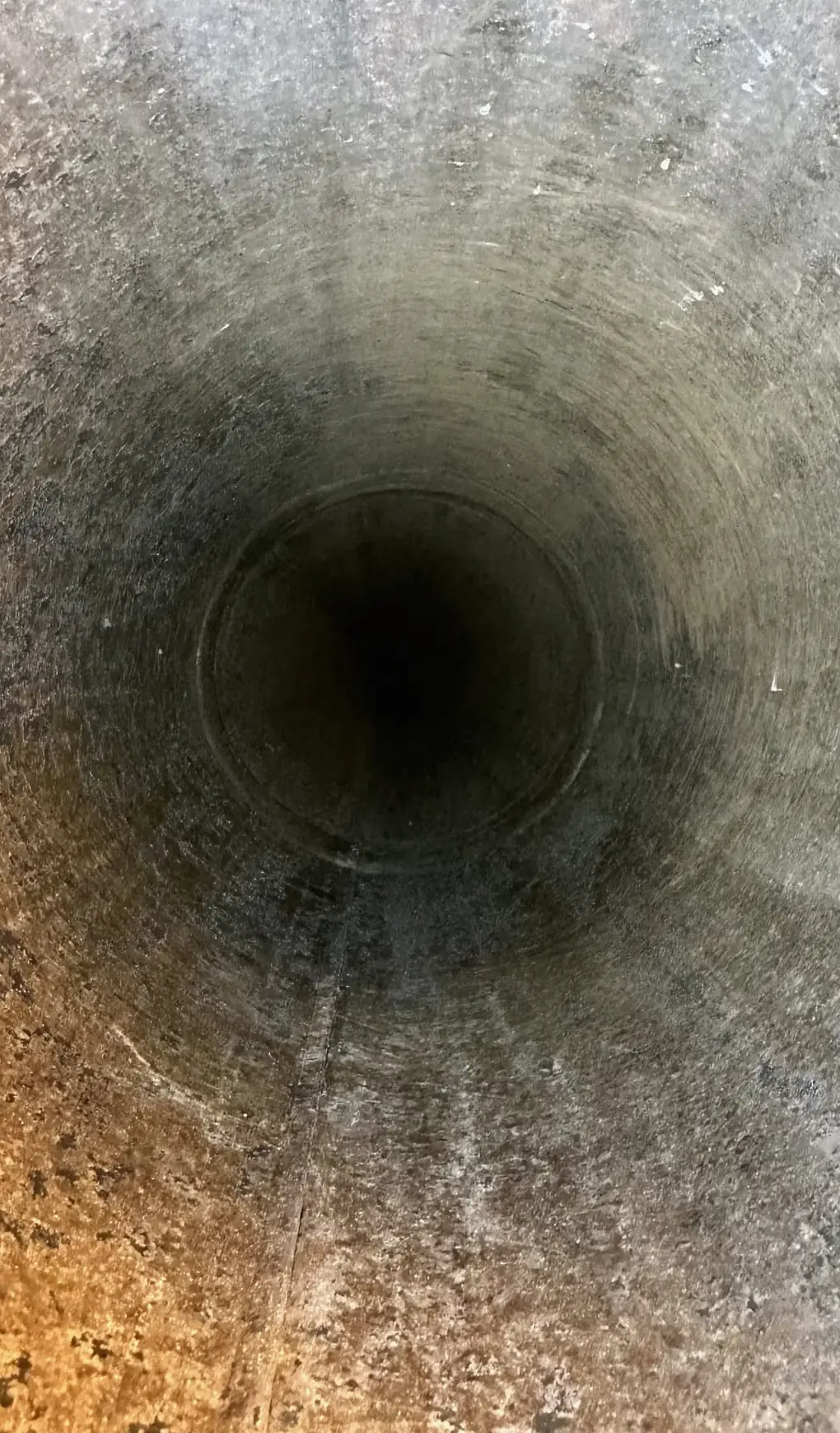
Creosote in a chimney can look like loose black soot, rough dark flakes, or a hard, shiny coating on the flue walls. You can look for visible deposits from the fireplace opening, but a chimney inspection is the way to assess buildup you cannot safely see.
Need help now? (443) 596-9310
What Creosote Looks Like on Chimney Walls
Creosote is a combustible deposit left as wood smoke moves through a chimney and cools. It may appear as soft, powdery black soot; brittle, rough flakes; or a dense, dark coating that looks shiny or tar-like. The surface can vary within one flue, so a small patch you can see does not show how much has collected higher up.
A black mark by itself does not prove that a deposit is creosote. Ash and ordinary soot can also look dark, while residue may have different textures depending on how it formed. The Chimney Safety Institute of America describes how creosote develops and why deposits matter in its guide to preventing chimney fires.
Where to Look for Visible Creosote Without Climbing
Keep your check limited to places you can see from the room. Do not climb onto the roof, reach into the flue, or scrape a deposit to identify it; a visual check from below cannot show the full chimney interior.
- Firebox walls and opening — With the fireplace completely cool and unused, look for dark, crusty residue around the upper firebox and the opening to the flue. Check whether it is loose dust or a firmly attached coating, but do not touch it.
- Damper area — From a safe position inside the room, look above the firebox for deposits around the damper. A flashlight can help you see the opening; do not put your head or body into the fireplace.
- Smoke and odor during use — Smoke that spills into the room or a persistent smoky smell can point to a venting or fireplace problem, not just visible buildup. Stop using the fireplace and arrange a professional assessment rather than trying to diagnose the flue yourself.
- Material that falls into the firebox — Dark flakes or gritty pieces on the firebox floor may have come from higher in the chimney, but appearance alone cannot confirm their source. Photograph what you can see and share the observation when booking an inspection.
How to Check for Creosote From the Fireplace
Use these steps only for a basic observation from inside the home. They do not replace inspection or cleaning, and they do not require you to enter the chimney.
- Let the fireplace cool — Do not inspect while a fire is burning or while the firebox and surrounding parts are still hot. Start only when the fireplace is fully cool and no longer in use.
- Gather a flashlight and phone — Use the flashlight to illuminate the firebox and damper area, and use your phone to record visible deposits from a safe standing position. Check that you can see without leaning into the opening.
- Look across the firebox — Scan the firebox walls and the area above its opening for black or dark-brown residue. Note whether it looks dusty, flaky, rough, or glossy without touching or disturbing it.
- Check the visible damper area — Look for deposits around the damper and the lower edge of the flue. If the view is blocked or too high to see comfortably, record that the area is not visible instead of reaching farther.
- Photograph what you can see — Take a clear photo from the same safe position, including the location of the deposit. Check that the image shows the texture and surrounding area; a photo is useful context, not a diagnosis.
- Note smoke or odor concerns — Write down whether smoke has entered the room or a smoky odor remains after use. Those details help a chimney professional consider the visible residue alongside the fireplace’s performance.
- Stop before cleaning or climbing — Do not scrape hard or shiny material, use household chemicals, or climb onto the roof to check the chimney top. Arrange professional service if you see buildup or cannot inspect the flue safely.
Need help now? (443) 596-9310
What the Texture Can—and Cannot—Tell You
Loose, powdery residue may be soot, while rough flakes or a shiny, hardened coating can be signs of more tenacious deposits. Those clues are useful to report, but they do not establish the deposit’s depth, the condition of the flue, or whether the chimney is ready for use.
Do not treat a clean-looking section near the fireplace as proof that the entire chimney is clear. Deposits can be out of view above the damper, and a visible layer may cover an underlying problem. For a closer explanation of how appearance can differ, see our guide to the different types of creosote.
When Creosote Calls for an Inspection or a Sweep
Inspection and cleaning answer different questions. An inspection assesses the chimney’s condition; a sweep removes deposits. What fits depends on whether you need the condition checked, buildup removed, or both.
Choose an inspection when the condition is unclear
Arrange a chimney inspection when you see residue, cannot see far enough to judge the flue, or have a concern about smoke or odor. The inspection helps assess what is present before deciding whether cleaning or other work is needed. Our chimney inspection service is the relevant place to start.
Choose a sweep when deposits need removal
A sweep is appropriate when professional service identifies deposits that need to be removed. Do not assume that a brush from the fireplace opening will safely remove a hard, shiny coating; the type and location of buildup affect the work required.
Ask about both when buildup is visible
When you can see deposits but do not know their extent, describe the appearance and ask about inspection and cleaning together. The finding determines whether cleaning is needed, rather than color alone.
What Can Go Wrong When You Judge Creosote by Sight
The main risk is mistaking a limited view for a complete check. A visible deposit can draw attention to the problem, but deposits farther up the flue, a damaged surface, or another venting issue may not be visible from the firebox. Scraping a patch to test it can also disturb material without telling you what lies beyond it.
Avoid using a home remedy or a chimney-cleaning product as a substitute for assessing the flue. If material looks glossy and firmly attached, if debris keeps appearing, or if smoke spills into the room, stop using the fireplace and contact a chimney professional. A previous chimney fire or a significant weather event also warrants professional assessment; CSIA guidance describes when a more detailed inspection may be appropriate.
Need help now? (443) 596-9310
What to Share When Booking a Creosote Check
When you book, tell us whether the fireplace burns wood or uses another fuel, where you saw the residue, and whether you noticed smoke entering the room or a lingering odor. A photo taken from a safe position can help us understand what you observed. We offer same-day service, and Maryland Chimney Pros is open 24 hours a day, 7 days a week.
Call (443) 596-9310 to book a chimney inspection. We can also help in Spanish: Hablamos español. For a separate explanation of inspection pricing, read how much a chimney inspection costs in Maryland.
Frequently asked questions
Can I tell whether a deposit is creosote by touching it?
Do not touch or scrape chimney deposits to identify them. Their appearance and texture can provide useful clues, but a professional needs to assess the flue to determine what the material is and whether it needs removal.
Does shiny black buildup mean the chimney needs attention?
A shiny, hardened coating can be a sign of a tenacious creosote deposit and should be assessed by a chimney professional. Do not try to chip it away or use the fireplace until you have arranged an evaluation.
Will a flashlight check show the whole chimney?
No. A flashlight can help you see the firebox and the lower area near the damper, but it cannot reliably show the full flue or its condition. Use the check to report visible signs, not to decide that the chimney is clear.
Should I use the fireplace if I see creosote?
Visible buildup is a reason to have the chimney assessed before you rely on the fireplace, because a view from below cannot show how much is present or whether another issue affects venting. Stop using it and arrange an inspection if you see deposits, smoke spills indoors, or a persistent smoky odor.
Get Visible Buildup Checked
Call (443) 596-9310 to book a chimney inspection and describe what you can see from the fireplace.