
Can You Clean Your Chimney Yourself?
You can remove cold fireplace ash and check areas you can see, but chimney sweeping involves cleaning inside the flue and is best left to a professional. For creosote or a full flue cleaning, book a chimney cleaning service.
Need help now? (443) 596-9310
Can I Clean My Chimney Myself, or Should I Hire a Sweep?
You can tidy the firebox and remove ash once it is completely cold. That is different from sweeping the chimney: flue cleaning means removing soot and creosote from the passage that carries smoke out of your home, including areas you cannot see from the hearth.
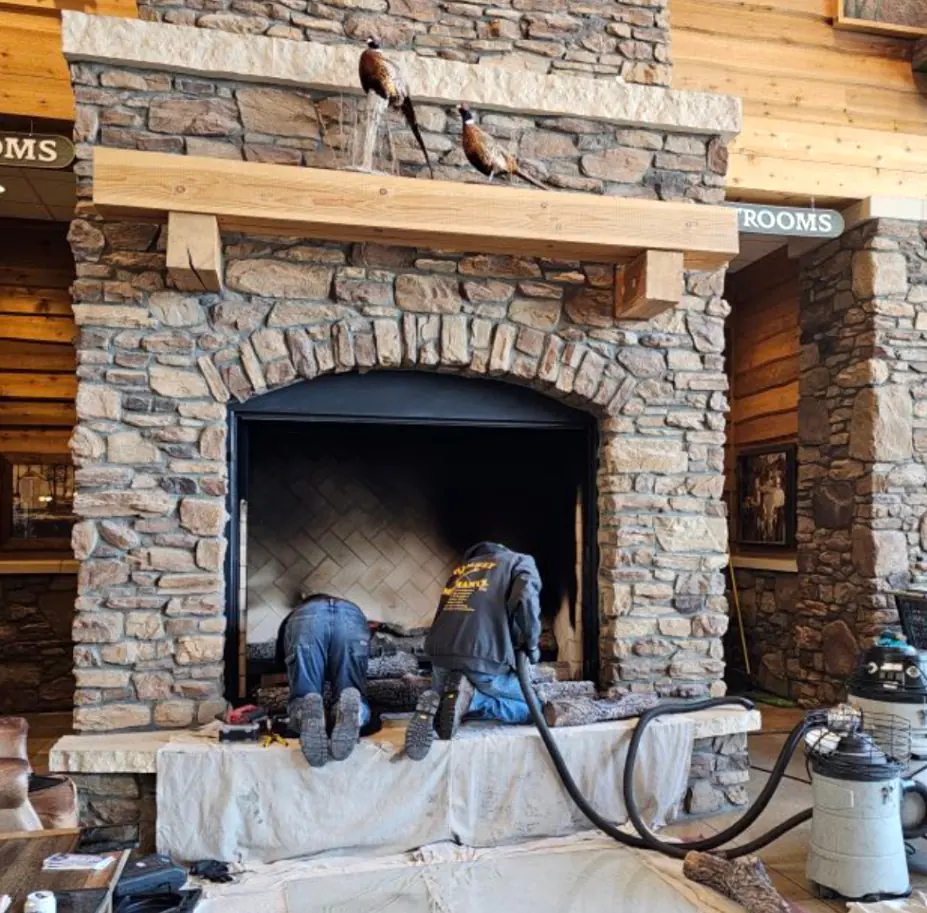
A chimney brush and rods are not a substitute for knowing the flue’s condition or working safely at roof level. A professional sweep has to reach the full passage, contain the debris, and check for deposits or damage that can affect how the fireplace vents. For that work, book our chimney cleaning service rather than trying to sweep the flue yourself.
The Chimney Safety Institute of America’s homeowner resources cite NFPA 211’s recommendation for an annual chimney inspection. An inspection checks condition; it does not mean every chimney needs the same amount of cleaning. The amount of use and the deposits found help determine whether sweeping is needed.
Which Chimney Tasks Are Safe to Handle at Home?
Firebox ash cleanup
This is the task most homeowners can handle: wait until the fireplace is completely cold, then remove loose ash from the firebox with a metal shovel. Keep the work inside the firebox; ash cleanup does not remove creosote from the flue.
Visual checks from the room
Use a flashlight to look for obvious debris, damaged firebox surfaces, or deposits visible from the opening. A view from below cannot show the full chimney, so a clear-looking opening is not proof that the flue is clean.
Flue sweeping
Leave this to a chimney sweep. Cleaning the flue requires suitable brushes and access through the full chimney, while checking deposits and condition helps determine whether brushing alone is appropriate.
Inspection after a change or concern
Arrange an inspection when you notice smoke entering the room, see falling debris, or have made a change to the fireplace or chimney. An inspection can identify concerns that ordinary ash cleanup cannot reveal.
What Should You Gather Before Cleaning the Firebox?
For ash cleanup only, gather a metal shovel, a metal container for ash, gloves, and a flashlight. These tools let you work at the hearth without treating visible ash as a sign that the flue has been swept.
- Metal shovel and metal container — Use them to lift and contain cold ash. Keep the container away from anything that could catch fire, and follow local instructions for disposing of fireplace ash.
- Flashlight — Use it to look into the firebox and note visible debris or damage. Do not climb onto the roof or lean into an opening to see farther up the chimney.
- Gloves and a dust mask — They can reduce contact with ash and dust during a small firebox cleanup. If you see heavy deposits or loose material beyond the firebox, stop and arrange professional service instead of stirring it up.
Need help now? (443) 596-9310
How Do You Clean Fireplace Ash Without Sweeping the Flue?
These steps cover a basic firebox tidy, not chimney sweeping. Do not start until the fireplace and its contents are completely cold.
- Confirm the fireplace is fully cold — Wait until there is no heat or glowing material in the firebox or ash. Check carefully before handling anything; if you are unsure, leave the ash in place.
- Put on gloves and a dust mask — Protect your hands and reduce exposure to loose dust. If the cleanup produces a large amount of airborne dust, stop rather than continuing to stir it.
- Look over the firebox first — Shine a flashlight over the firebox floor and visible surfaces. Note cracks, loose pieces, or debris; do not scrape or pull at material that appears damaged.
- Remove loose ash with a metal shovel — Work gently and keep the shovel inside the firebox. Leave a thin layer of ash if you prefer, but do not mistake a clean hearth for a clean chimney.
- Place ash in a metal container — Transfer the ash directly into the container rather than a paper bag or plastic bin. Check that no glowing material is present before moving the container.
- Check the opening again — Use the flashlight to see whether debris, staining, or visible buildup remains around the firebox opening. If you spot material that may extend into the flue, stop and book a sweep.
- Keep the roof and flue work off your list — Do not climb onto the roof or push a brush into the chimney as a substitute for a full cleaning. A homeowner view from the hearth cannot confirm the full flue is clear or identify hidden damage.
- Record anything unusual — Note smoke entering the room, persistent odors, falling debris, or visible damage and share those details when arranging service. Avoid using the fireplace if it is not venting properly.
When Should You Stop DIY Cleaning and Call a Chimney Sweep?
Stop at ash cleanup if you see a thick, dark, or shiny coating, cannot tell whether material is soot or creosote, or find debris higher in the chimney. Creosote can build up as smoke cools inside the flue, and brushing without checking the chimney can leave deposits behind or miss a condition that needs attention.
Smoke spilling into the room, a recurring smoky odor, loose masonry, or signs of an animal or blockage are reasons to arrange professional help rather than keep cleaning. The frequency of chimney cleaning depends on use and what an inspection finds; a household visual check cannot establish that the flue is clear.
If a fireplace has been changed, the chimney has been relined, or it has experienced a fire or severe weather event, an inspection may need to go beyond a basic visual check. CSIA’s guidance for a Level 2 masonry inspection describes when that inspection is recommended and calls for a video scan.
Does Your Fireplace Need Sweeping, an Inspection, or Both?
Choose sweeping for deposits
A sweep removes soot and creosote from the flue. CSIA identifies creosote buildup of 1/8 inch as a threshold for sweeping, but homeowners may not be able to measure deposits across the full passage safely.
Choose an inspection for condition
An inspection looks for damage, blockage, or other concerns that affect use. It is especially relevant when you notice smoke problems or have changed the appliance or chimney.
Ask about both when the cause is unclear
A smoky fireplace may point to a ventilation problem, buildup, or another condition. The distinction between chimney sweeping and chimney cleaning can help clarify the work, but an inspection determines what your particular chimney needs.
Need help now? (443) 596-9310
What Happens When You Book Chimney Cleaning?
When you book, describe the fireplace type, how often you use it, and what you noticed, such as smoke in the room or visible deposits. Those details help identify whether you are asking for cleaning, an inspection, or both. Maryland Chimney Pros provides chimney cleaning, and owner Darren Whitaker has 22 years of experience with chimneys and fireplaces.
A visit’s length depends on the chimney’s condition, access, and the work needed; heavy deposits or a concern that needs inspection can add work beyond basic sweeping. Same-day service is available, and the company is open 24 hours a day, 7 days a week. Call (443) 596-9310 or contact us to book.
Frequently asked questions
Can a chimney brush from a hardware store clean the whole flue?
A brush may remove some deposits where it reaches, but it does not establish that the full flue is clean or undamaged. A professional sweep can access the chimney and assess deposits across the passage.
Is cleaning fireplace ash the same as chimney sweeping?
No. Ash cleanup removes loose material from the firebox, while sweeping removes soot and creosote from inside the flue. A tidy hearth does not show whether the chimney needs cleaning.
How long does a chimney cleaning visit take?
The length depends on access, the amount of buildup, and whether the chimney needs more than basic sweeping. Heavy deposits or an inspection concern can make the work more involved.
Can I use my fireplace if smoke comes into the room?
Do not keep using a fireplace that is sending smoke into the room. Arrange a chimney inspection so the cause can be checked before you use it again.
Book Chimney Cleaning in Maryland
Call (443) 596-9310 to book chimney cleaning or an inspection. Same-day service is available.